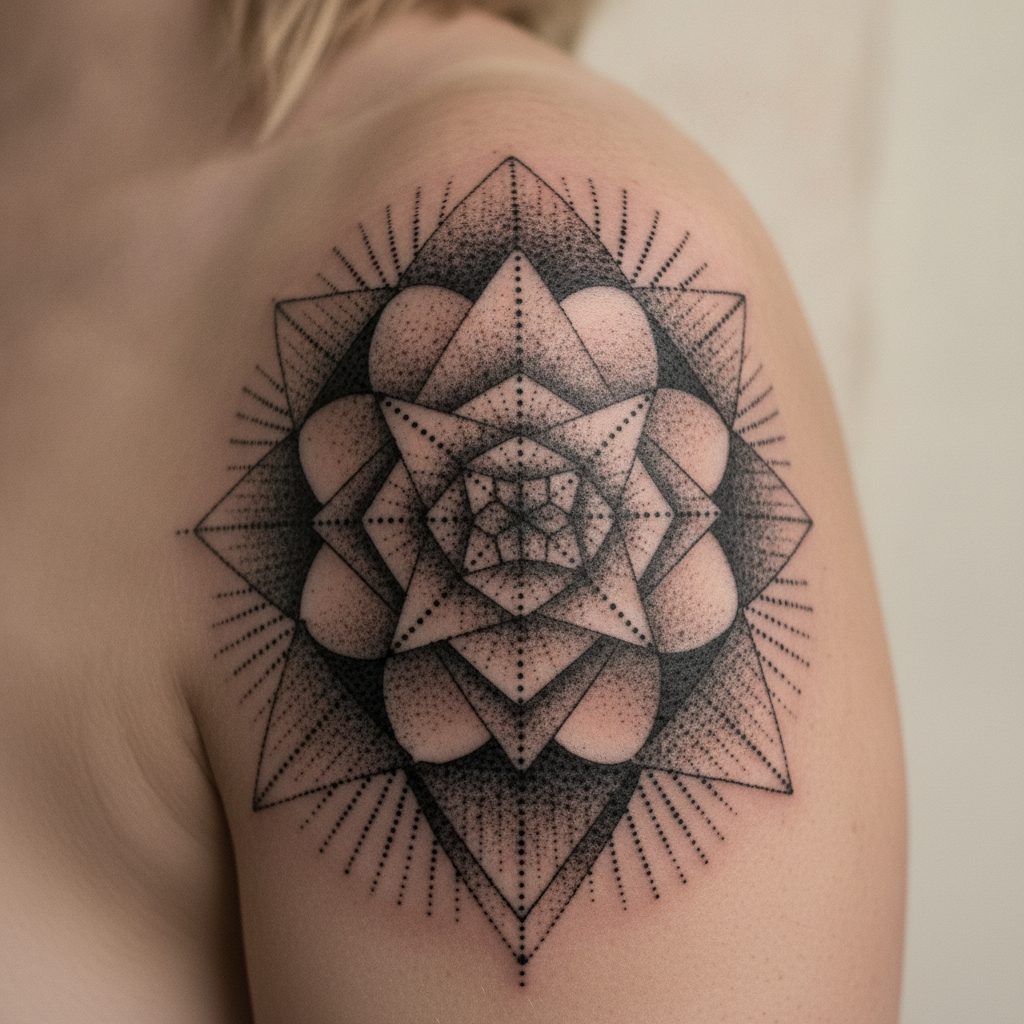
There's a reason you're seeing dotwork patterns everywhere lately. In a world of digital noise, there's something grounding about a design made of thousands of individual, intentional points. It feels both ancient, like something found in a sacred text, and incredibly modern, almost like pixels rendered on skin. As an artist who fell in love with the precision of blackwork, dotwork has a special place in my heart. The patience and control it takes to build up a gradient or a solid line, one dot at a time, is a form of meditation for me. The result is a tattoo with incredible depth and texture that just can't be replicated with a standard line. For me, it’s the perfect blend of mathematical precision and organic flow. In this roundup, I'm going to walk you through five distinct ways to wear a dotwork pattern tattoo. We'll explore how these intricate designs can complement the body, from a bold geometric cuff to a soft, stippled landscape, so you can find a piece that truly speaks to you.
What to Know First
Before you commit to a dotwork pattern, let’s talk logistics. Placement is key; these designs excel at wrapping around limbs like the forearm or calf, creating a seamless, 3D effect. They also look stunning on flat planes like the upper back or chest, where the symmetry can truly shine. As for pain, it’s a different sensation than traditional linework. Many people find it less intense—more of a persistent, scratchy feeling than a sharp sting. However, areas with dense packing will be more demanding. Because dotwork is so labor-intensive, pricing is almost always by the hour. A small, palm-sized piece might take 2-3 hours, while a full sleeve is a serious investment of time and money. When it comes to aging, a skilled artist is non-negotiable. They'll know how to space the dots so they heal crisply and soften beautifully over time, rather than blurring into a gray blob. My tip for first-timers? Start with a smaller geometric piece on your inner forearm. It’s a great way to test your pain tolerance and see how your skin heals the style.
1. Geometric Forearm Cuff
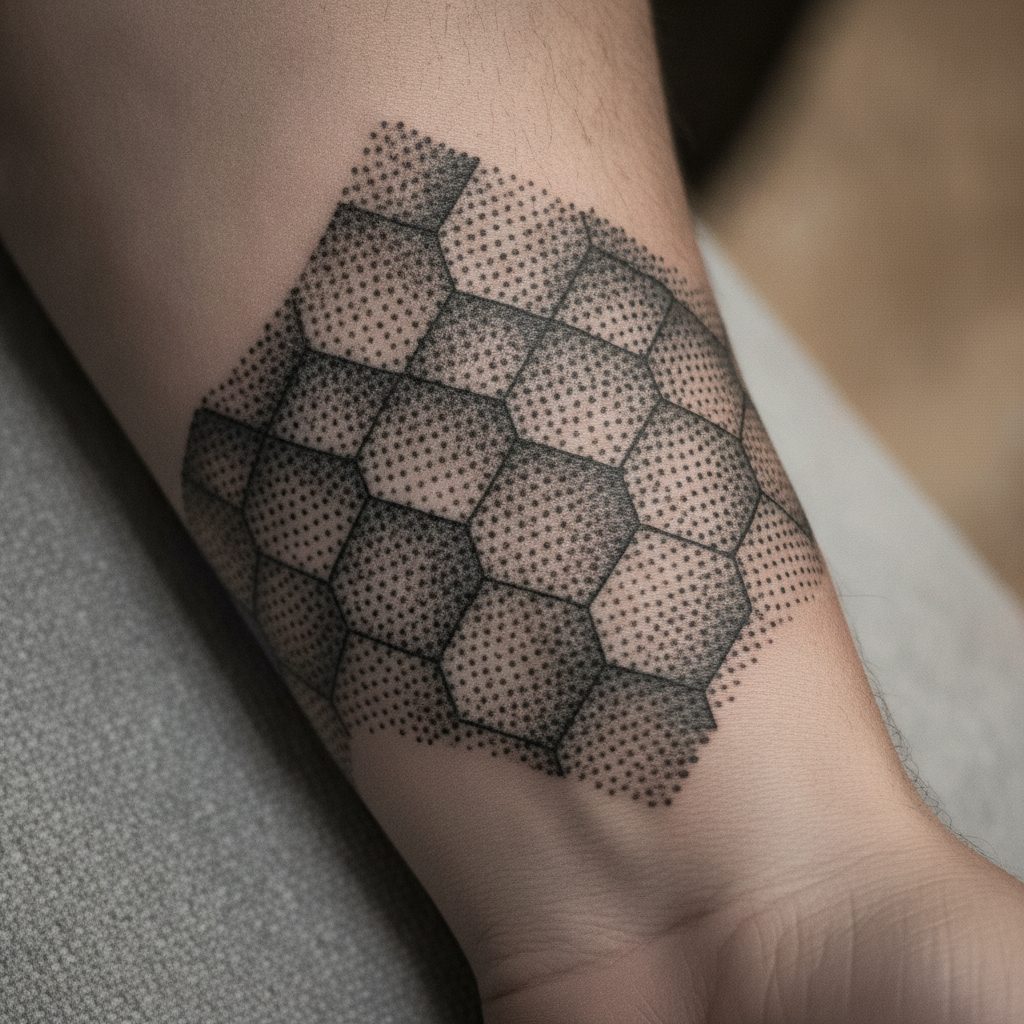
This is a classic for a reason. A geometric cuff uses patterns like hexagons, triangles, and the Seed of Life to create a band that wraps the forearm. The magic is in the dot density; an artist can use stippling to create gradients that give the flat shapes a stunning 3D effect. This design often symbolizes balance, harmony, and the underlying structure of the universe. For a cuff, it’s crucial that the artist designs the stencil to flow with your arm's unique muscle structure, ensuring it looks powerful and intentional from every angle.
2. Mandala Shoulder Cap
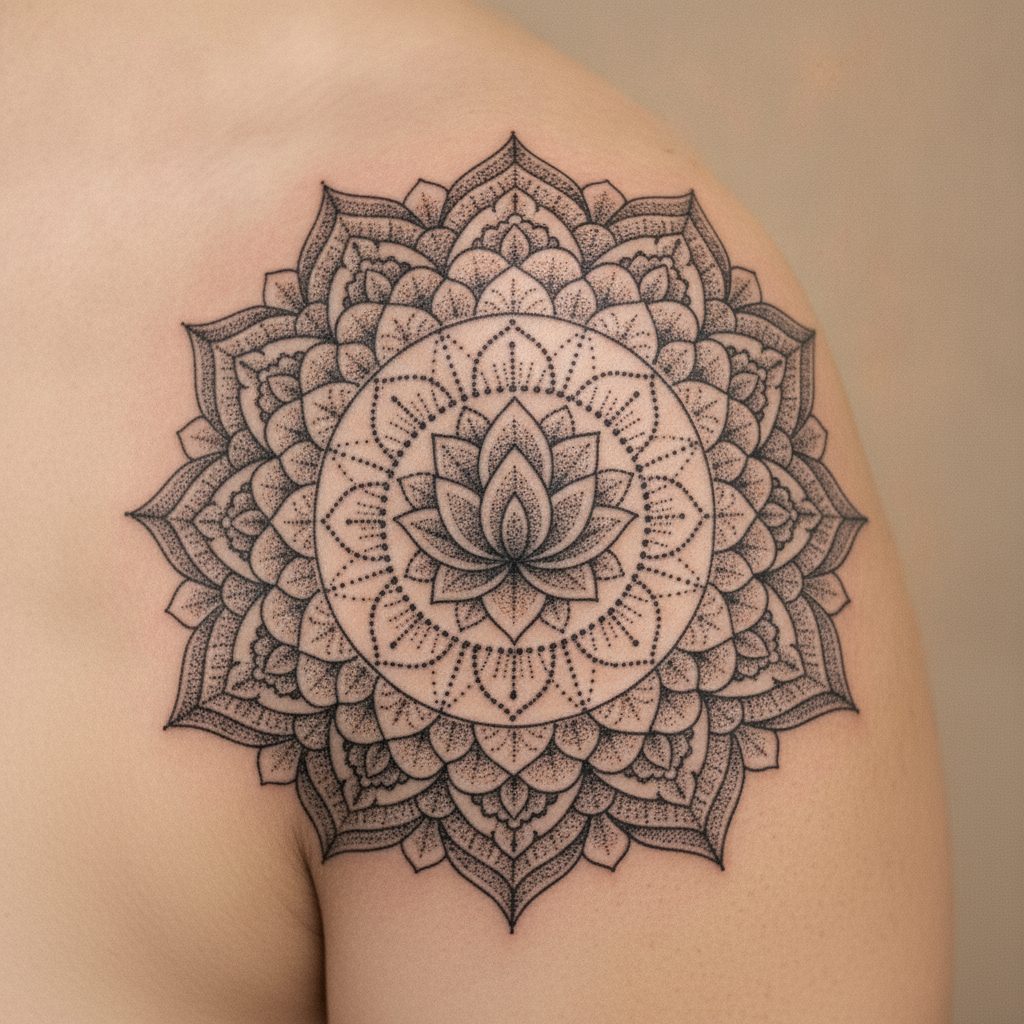
A mandala is a perfect match for dotwork, and placing it on the shoulder creates a beautiful piece of organic armor. This design uses concentric circles and floral-inspired geometry to form a pattern that drapes perfectly over the curve of the deltoid. It represents unity, eternity, and wholeness. I love using a combination of single-needle dots for the delicate outer details and a larger needle grouping to build up the denser, bolder parts of the core pattern. This creates incredible depth and contrast. The circular nature of the mandala makes it an ideal design to expand upon later if you decide you want to build out a sleeve.
3. Stippled Landscape Collarbone
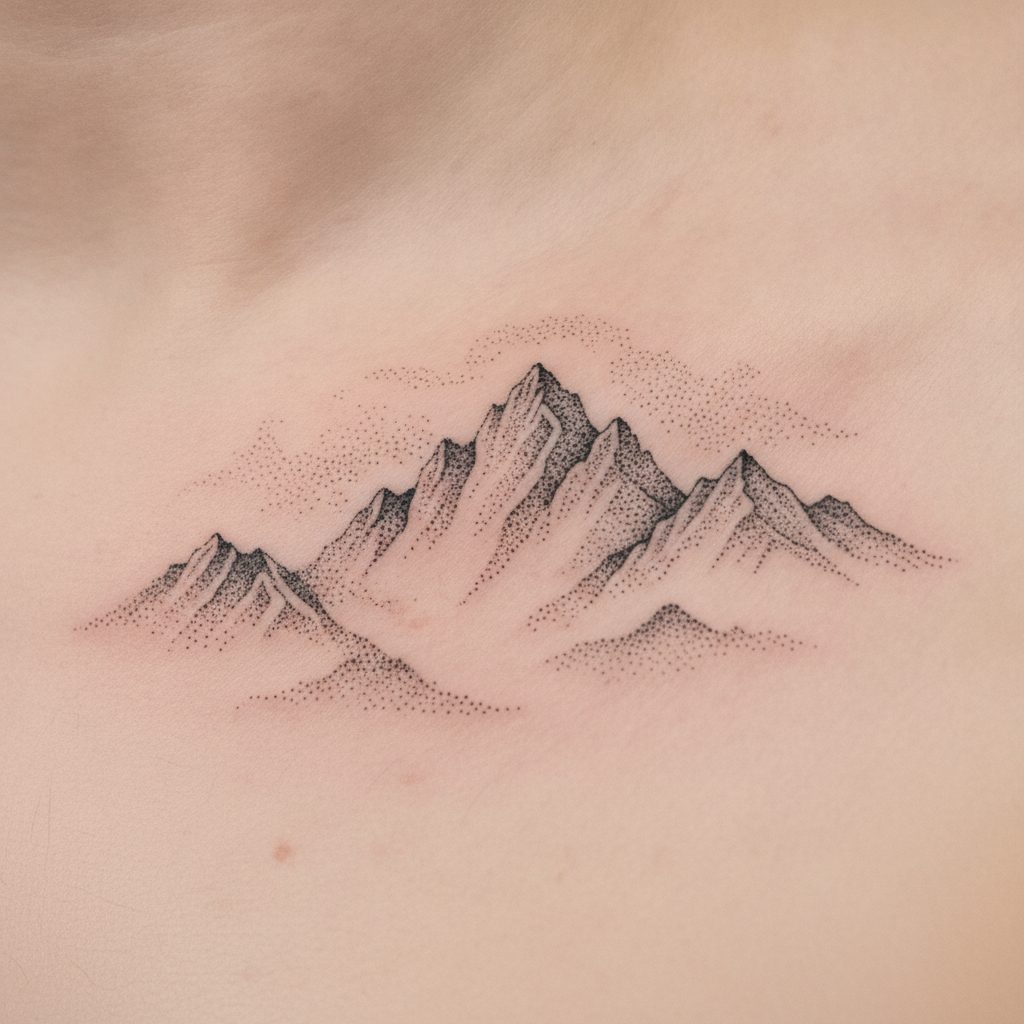
Dotwork isn't just for geometric patterns; it can also create soft, atmospheric illustrative pieces. A stippled mountain range running along the collarbone is a subtle yet powerful statement. The entire design, from the sharp peaks to the misty sky, is rendered with varying densities of dots, creating a soft, almost dreamlike texture. This motif symbolizes personal journeys, overcoming obstacles, and a love for nature. Be mindful that this is a bony area, which can make it a more sensitive spot to get tattooed, but the stunning, delicate result is well worth it.
4. Sacred Geometry Back Piece
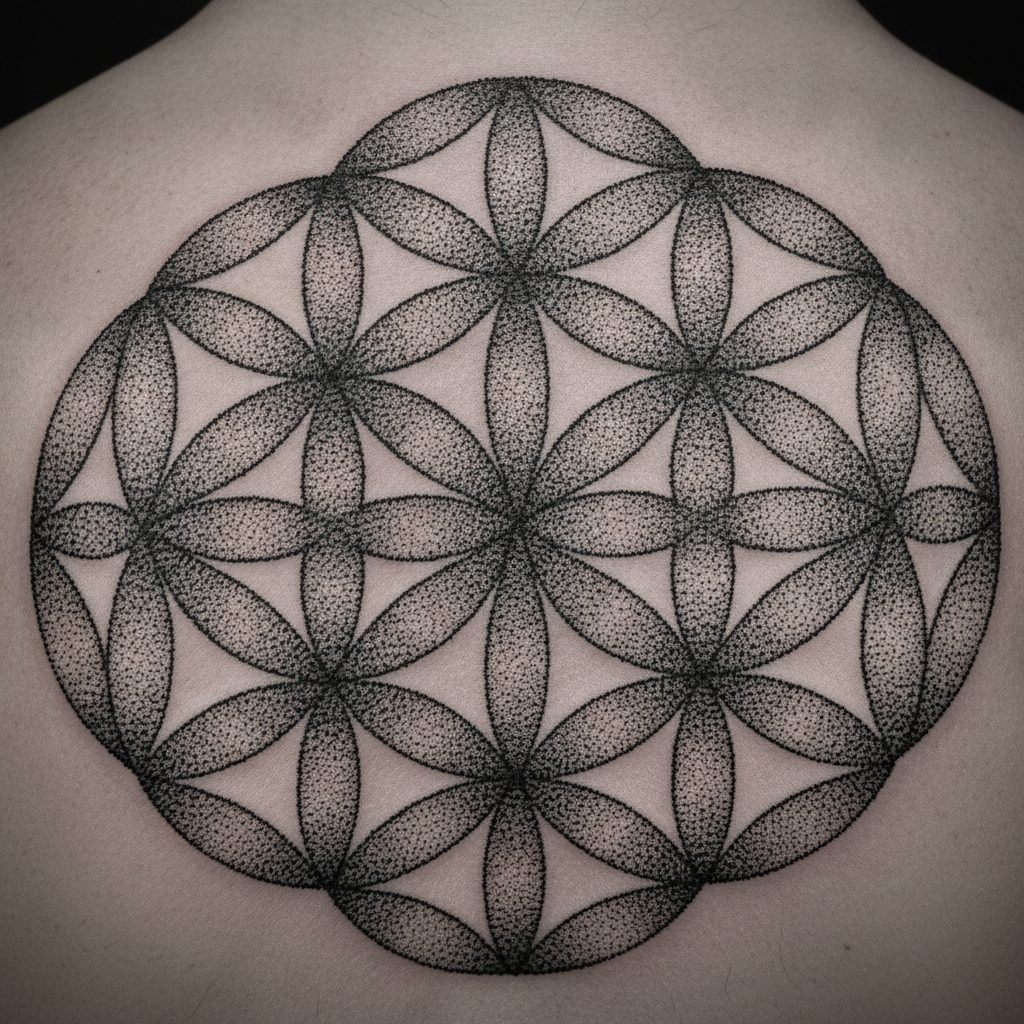
For a true statement piece, nothing beats a large-scale sacred geometry pattern on the upper back. Designs like the Flower of Life or Metatron's Cube are incredibly powerful when rendered in meticulous dotwork. The flat, broad canvas of the back allows the symmetry and precision of the pattern to be the undisputed focal point. Symbolizing creation, consciousness, and the interconnectedness of all things, this is a deeply meaningful tattoo. A piece of this scale is a serious commitment, often requiring multiple long sessions, so be sure you're ready for the journey before you begin.
5. Abstract Flow Calf Wrap
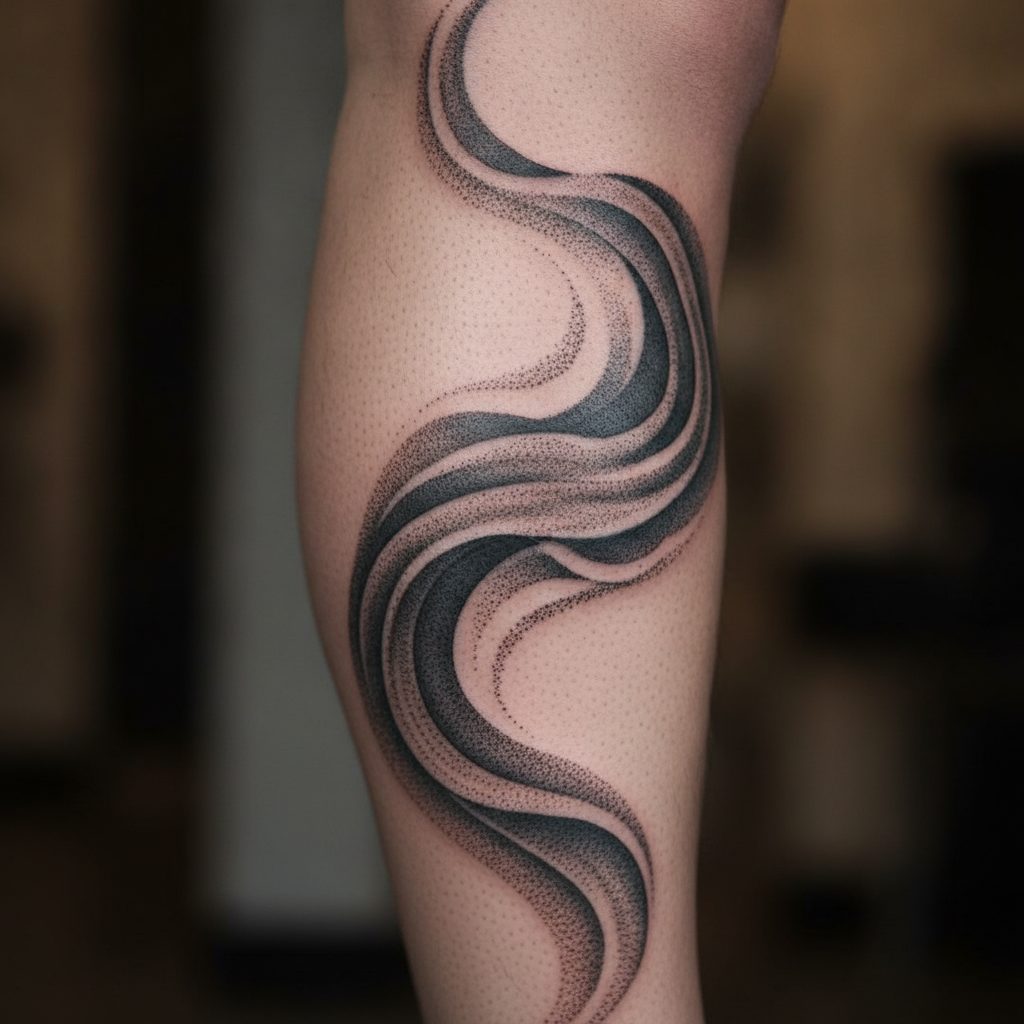
Not every pattern needs to be a recognizable symbol. An abstract flow of dots that wraps around the calf muscle can be one of the most personal and dynamic designs. This style mimics natural forms like smoke, water, or wood grain, with the artist creating gradients and swooping lines that complement the body's natural curves. It symbolizes energy, movement, and adaptability. The best part is that it's entirely unique to you; you and your artist can create a custom flow on the spot that moves with your body. This is a great choice for athletes or dancers who want a tattoo that accentuates their physique.
Final Thoughts
Dotwork is so much more than just a trend; it's a testament to patience, precision, and the power of texture. Whether you're drawn to the rigid symmetry of a geometric pattern or the soft, organic flow of a stippled design, the result is always a piece with incredible depth. My best advice is to really study an artist's portfolio. Look at how their dotwork has healed and how they build their gradients. When you find someone whose style resonates with you, trust them and collaborate on a design that feels like it was meant for your skin. A well-done dotwork tattoo isn't just ink—it's a work of art that will evolve beautifully with you.
FAQ
Does a dotwork tattoo hurt more than a regular one?
It's a different kind of pain. Instead of the sharp feeling of a line being pulled, dotwork feels more like a consistent, abrasive vibration. Many find it more manageable, but densely shaded areas can be just as intense as any other tattoo style.
Why are dotwork tattoos often more expensive?
The cost reflects the time and skill required. Building up smooth gradients and solid shapes one dot at a time is an incredibly meticulous and time-consuming process. You're paying for the artist's expertise and the hours of focus needed to execute the design perfectly.
How well do dotwork pattern tattoos age?
When done by a skilled artist, they age beautifully. The dots will soften and spread slightly over decades, which a good artist accounts for by leaving enough space between them. High-contrast, bold patterns tend to hold their structure best over the very long term.
What's the best size for a first dotwork tattoo?
I recommend starting with something palm-sized or smaller, like a simple geometric shape on the forearm or ankle. This gives you a feel for the process and healing without the commitment of a large, multi-session project.