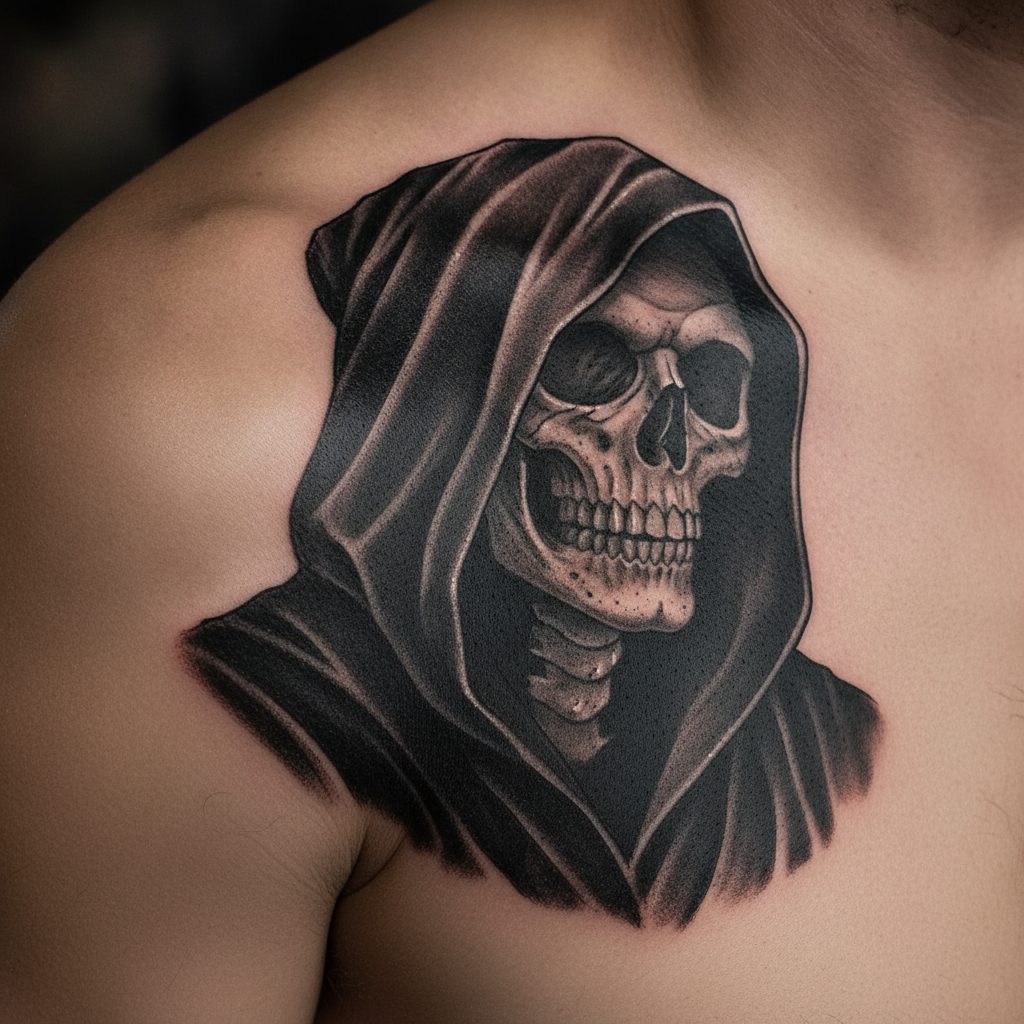
The classic hooded figure of Death, or the Grim Reaper, is having a major moment right now. I'm seeing it less as a morbid symbol and more as a statement of acceptance, of embracing life's full, beautiful, and temporary cycle. It’s a powerful motif that’s been part of tattoo culture forever, but artists are now pushing it in incredible new directions with blackwork, fine-line, and illustrative styles. As an artist who loves the impact of a strong black ink design, I get excited when clients want to tackle this subject. It’s a chance to play with shadow, texture, and symbolism in a way that’s deeply personal. In this roundup, I’ll walk you through five distinct approaches to a hooded death tattoo, breaking down the styles and techniques so you can find a design that feels less like a stock image and more like a piece of custom art made just for you.
What to Know First
Before you book your hooded death tattoo, let's talk practicals. Placement is key; for detailed illustrative or blackwork pieces, you’ll want a larger canvas like the back, thigh, or outer bicep to allow for deep shadows and clear lines. For simpler fine-line designs, the forearm or calf works beautifully. Pain-wise, expect more sensation on bony areas like the ribs or sternum, while fleshier spots are more forgiving. A palm-sized piece with moderate detail will likely start around $400-$600, but a large back piece can run into the thousands. These tattoos age incredibly well, especially those with solid black packing, as the bold contrast holds its power for decades. For first-timers, my biggest tip is to think about the mood. Do you want your Reaper to feel serene, menacing, or wise? Communicating that feeling to your artist is more important than finding a perfect reference photo.
1. The Fine-Line Reaper's Scythe
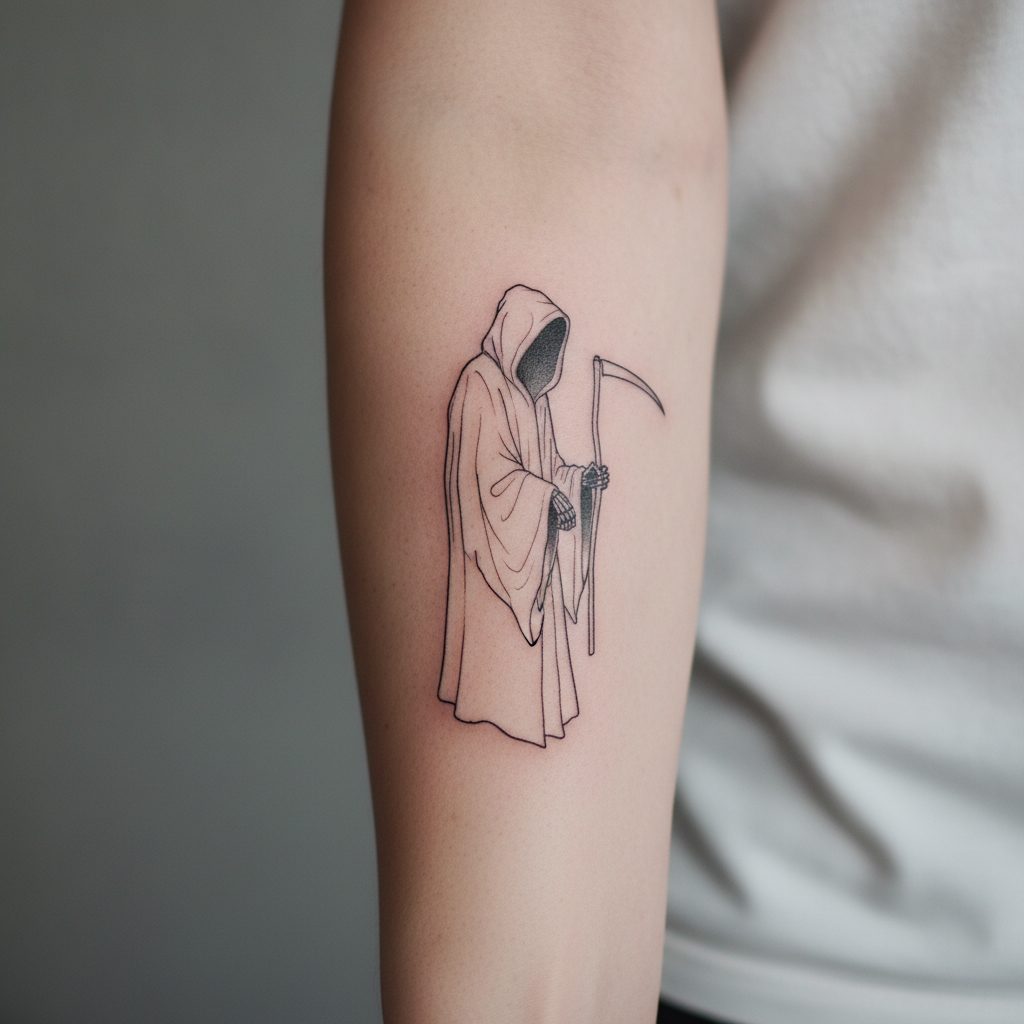
This design takes a powerful symbol and renders it with delicate elegance. Using a single needle, this fine-line style features a minimalist hooded figure, often in profile, with its iconic scythe. We'll skip heavy shading in favor of clean outlines and negative space, maybe adding a single botanical element like a withered rose or a sprig of lavender wrapped around the scythe's handle. Placed on the inner forearm, it symbolizes the quiet, inevitable balance between life and death. Because the lines are so fine, choose an artist who is an expert in this style to ensure the ink is packed correctly and ages into a soft, clear grey rather than blowing out.
2. Illustrative Blackwork Guide
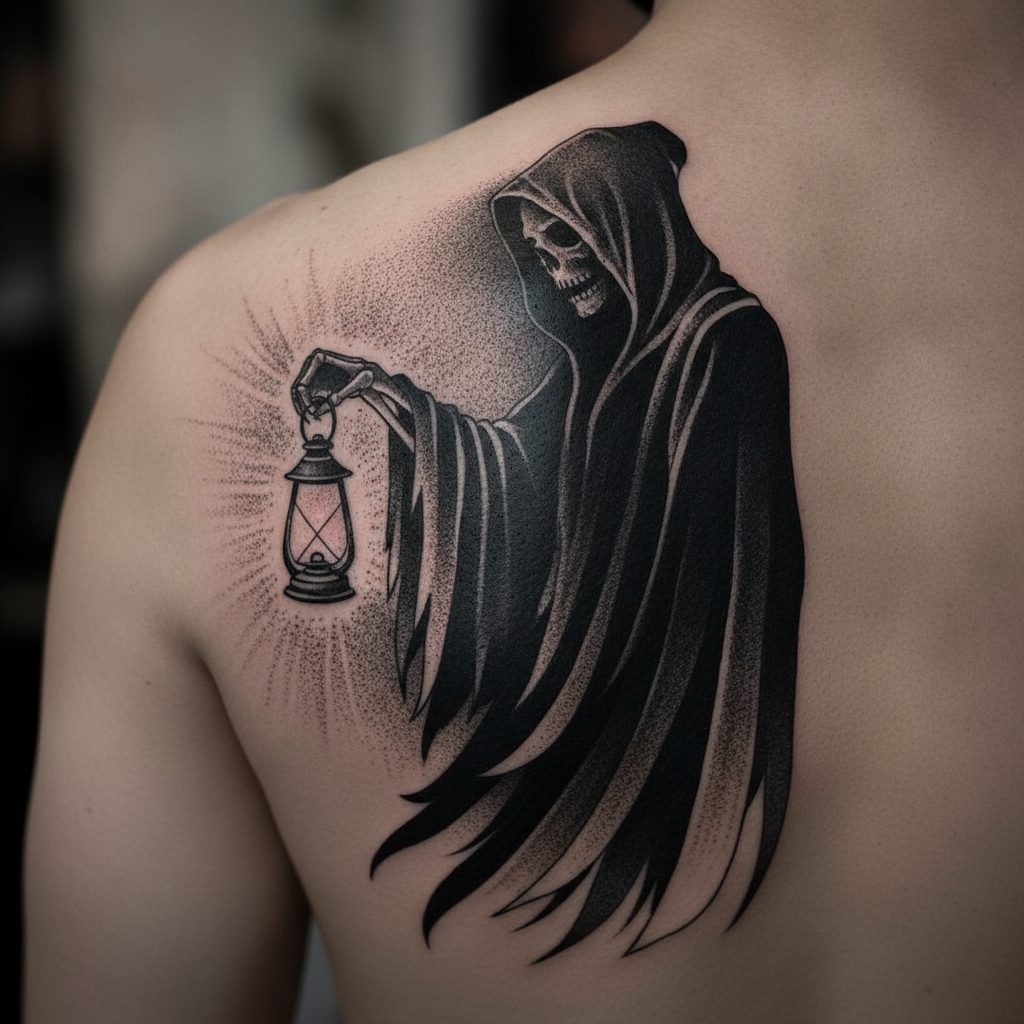
For a truly bespoke piece, consider a large-scale illustrative blackwork design for a back or thigh. This style uses fields of solid, saturated black to create a dramatic silhouette of the hooded figure. The only light source comes from a lantern held in its skeletal hand, casting subtle stippled or cross-hatched shadows. This isn't just Death as an ending; it's a depiction of Death as a guide through the unknown. The dense blackwork makes for a tattoo that will look stunning for life, as the contrast remains incredibly strong over time. This is a multi-session commitment, but the result is a breathtaking piece of wearable art.
3. American Traditional Death's Head
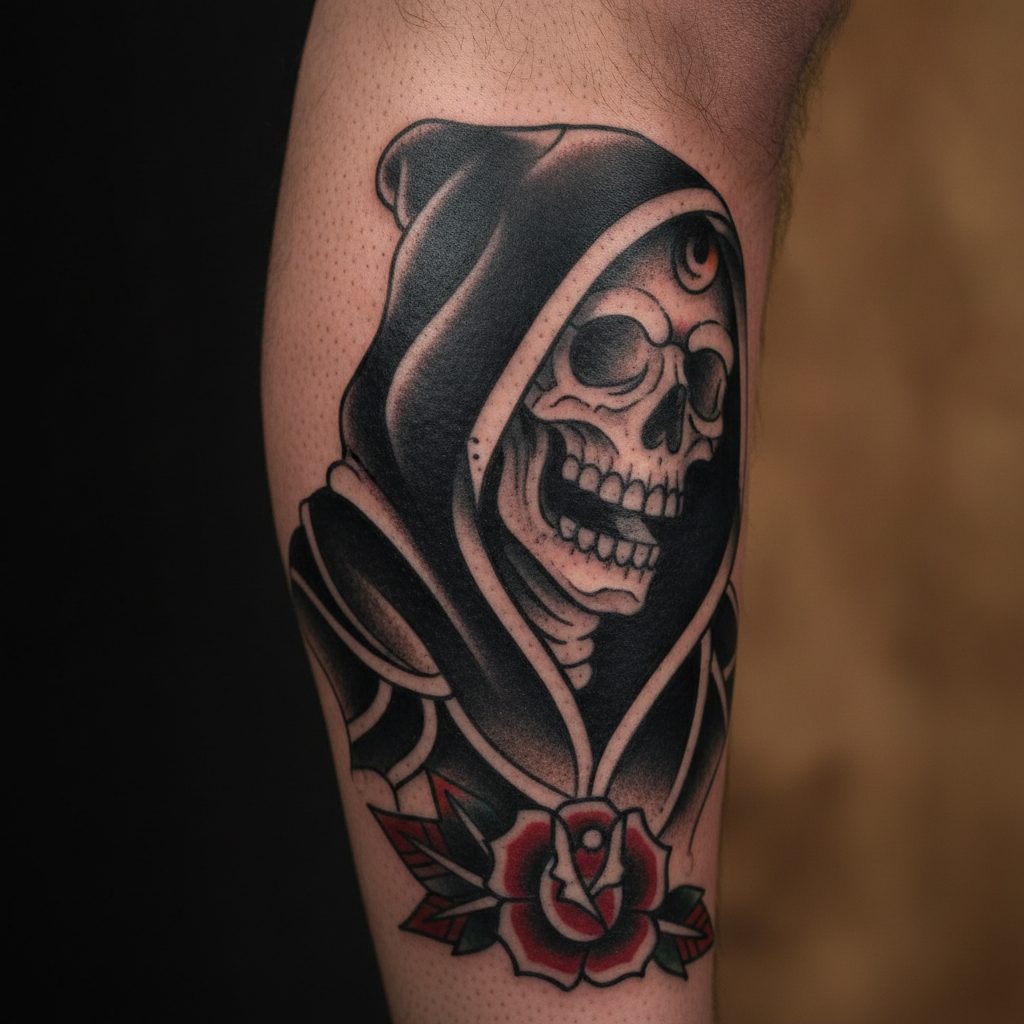
Lean into the timeless power of classic tattoo iconography with an American Traditional hooded death. This style is all about bold, confident outlines and a limited palette of heavy black shading with pops of negative space. The focus is on a crisp, readable design—a skull peeking from a simple, graphic hood—that will look good from across the room. Placed on the calf or outer bicep, it's a classic memento mori, a reminder to live life to its fullest. These tattoos are built to last; the bold lines and solid shading ensure it will remain a powerful, clear image for decades to come.
4. Engraved Woodcut Reaper
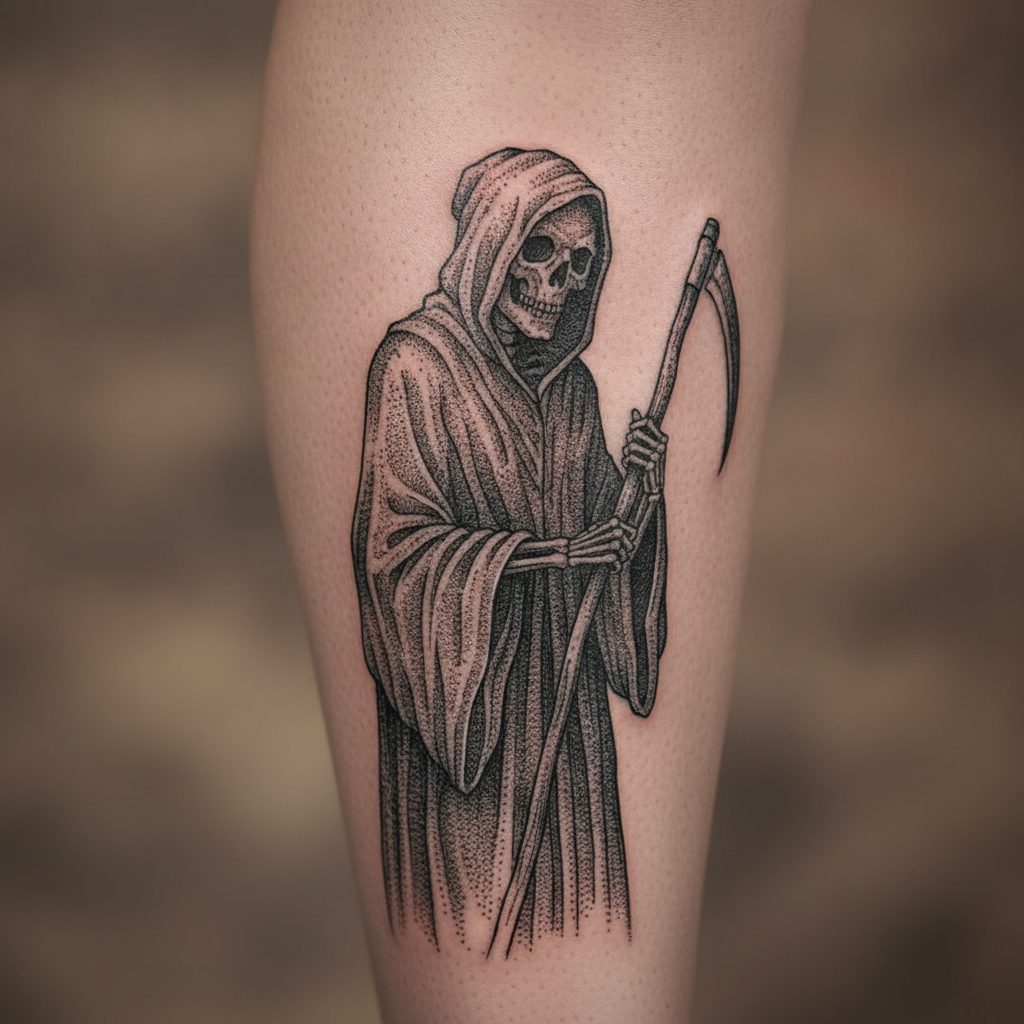
This style mimics the look of historical woodblock prints for a truly unique piece. Instead of smooth shading, we use meticulous cross-hatching and dotwork to build texture and depth within the reaper's robes and skull. It gives the tattoo an aged, almost academic feel, as if it were pulled from an ancient text. This technique looks amazing on a flat plane like the shin or forearm where the intricate line-work can be fully appreciated. It symbolizes mortality as a timeless, universal story. Be prepared for a longer session, as creating this texture line by line requires immense precision.
5. Micro-Realism Contemplative Death
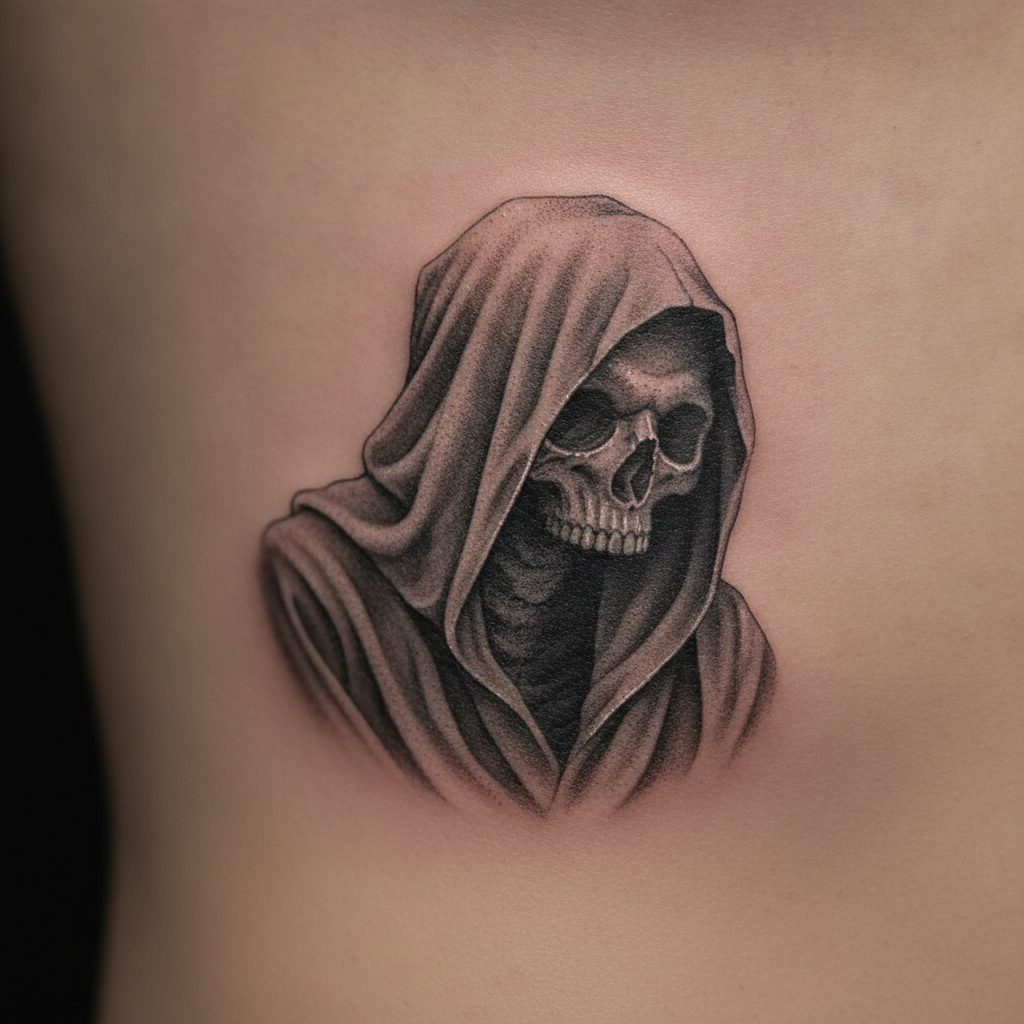
For a more subtle and personal take, a small micro-realism piece is perfect. This design focuses on a hyper-detailed, palm-sized portrait of a skull shrouded in the deep shadows of its hood, placed on the ribs or back of the arm. Using fine needles and subtle greywash, the artist creates a soft, photographic quality, capturing the texture of bone and fabric. The mood here is not menacing, but contemplative and serene—a quiet acceptance of fate. While micro-realism may require a touch-up every 5-10 years to keep the details crisp, its intimate scale makes for a deeply personal and striking tattoo.
Final Thoughts
Choosing a hooded death tattoo is a bold and personal decision. It's a design that carries so much weight and history, but what I love most is seeing how each person makes it their own. Whether you go for a delicate fine-line piece or a full back of immersive blackwork, the goal is the same: to create a piece of art that speaks to your perspective on life and its inevitable conclusion. My advice is to spend time finding an artist whose portfolio resonates with you. Share your ideas about the mood and the symbolism, and trust them to collaborate on something that feels powerful and true to you.
FAQ
What does a hooded death tattoo symbolize?
Traditionally, it symbolizes mortality and the acceptance of fate. However, it can also represent wisdom, the end of a difficult chapter, protection, or even serve as a 'memento mori'—a reminder to live life fully.
How much does a hooded death tattoo cost?
The cost varies widely based on size, detail, and artist. A small, simple fine-line piece might be $200-$400, while a large, detailed blackwork back piece could cost $2,000 or more over several sessions.
Where is the best placement for a hooded death tattoo?
This depends on the style. Large, detailed pieces are best on the back, thigh, or chest. Simpler or fine-line designs work well on the forearm, calf, or bicep where the lines can be appreciated.
Are hooded death tattoos painful to get?
All tattoos involve some pain, but it depends more on the placement than the design itself. Bony areas like ribs, spine, and feet will hurt more than fleshier areas like the thigh or outer arm.
How well do hooded death tattoos age?
Designs with a lot of solid blackwork or bold traditional lines age exceptionally well. Fine-line or micro-realism styles may soften over time and could benefit from a touch-up every 5-10 years to maintain their sharpness.